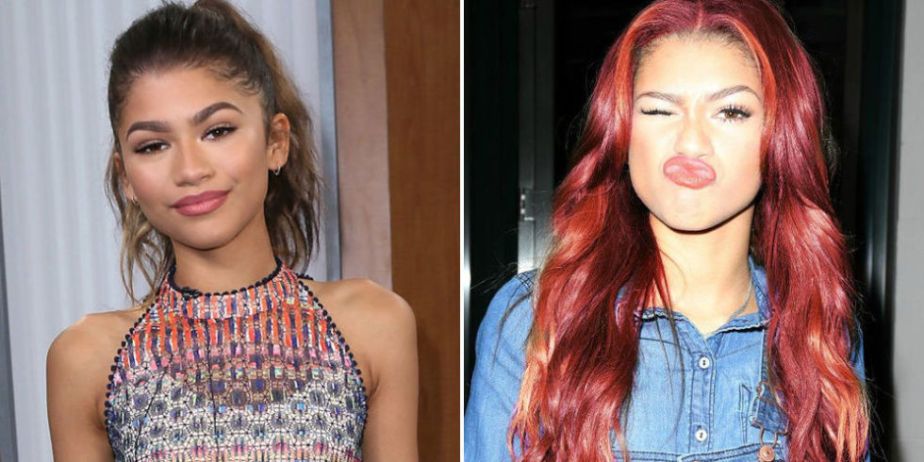
It seems there’s been a slow-burning uproar the last few days, since The Wrap posted an article leaking the alleged “real” role that young actress Zendaya has been cast for the upcoming film Spider-Man: Homecoming. In it, the article states that Zendaya, a young woman of color, will be playing the role of Mary Jane Watson, whom Spider-Man fans know to be the most iconic and well-known of Spider-Man’s love interests. In response, many fanboys–most of them white, of course–have taken to various social medias and websites to vent their collective outrage over this decision by the powers at Sony.
As a Spider-Man super fan myself, I’ve been aware of this announcement since it went live, and somewhat vaguely aware of the “backlash” that’s resulted. To be perfectly honest, it’s hard for me to get worked up over this issue, for a number of reasons.
- MJ’s race doesn’t fucking matter! I love the way I’ve seen most of the racists coding their response to this one. They know damn well they can’t openly say, “I’m angry because MJ shouldn’t be black!”, so instead they attack her hair color. “MJ should be a redhead!” they shout. It’s purely code for saying she should be white, which is complete and utter bullcrap. I’ll say here what I’ve said elsewhere: with very few exceptions, there are almost no Marvel comic book characters whose origins and backstories demand they be white. The Human Torch. Doctor Strange. Iron Fist. Hell, Iron Man, for that matter. And Spider-Man, as well as his supporting cast. Anyone who claims these characters must be exactly as they have been portrayed in the comics is saying so from a position of privileged ignorance
- It’s not official, at least not yet. The Wrap article, while it has certainly touched off a minor firestorm with this alleged development, can’t actually be officially taken at its word… yet. Until Marvel or Sony comments one way or the other, this is just a high-profile piece of gossip from a website. Does it sound like something Marvel would do? Yes it does. Does it seem like a logical development to include MJ in the Spider-Man films? Totally. Would Zendaya be the proper age to play MJ in a high school iteration of Spider-Man? Hell yes. But until we hear something official, we may be getting wound up over nothing.
- The racists are clearly losing, anyway. There’s been more focus on the backlash against the backlash. I’ve seen articles where Twitter trolls get schooled for their coded comments about Zendaya’s race, and hair color. Guardians of the Galaxy director James Gunn has defended the concept of a person of color playing MJ, very eloquently citing need for our movies to reflect the diversity of the world in which we live. The “controversy” surrounding this hypothetical piece of casting is really nothing more than the slowly, noticeably, deteriorating yelling of the privileged racists whose voices are becoming less and less important as time goes on. The powers at Marvel and Sony are not listening, and continuing to make movies and shows that prove to be highly successful, both financially and critically.
On a personal note, if Zendaya is indeed portraying MJ in Spider-Man: Homecoming, I am a-okay with this, in exactly the way I would have been okay with a Peter Parker who had been cast as a person of color. I’m not familiar with her work, but I will say that she does look stunning, and I’m willing to bet that Marvel and Sony would be putting her in the role because they know she can do the character justice. To me, that’s all that matters, and Marvel has long since earned my trust in these areas.
If Zendaya is MJ, bring it on! I’m sure she’ll be wonderful.

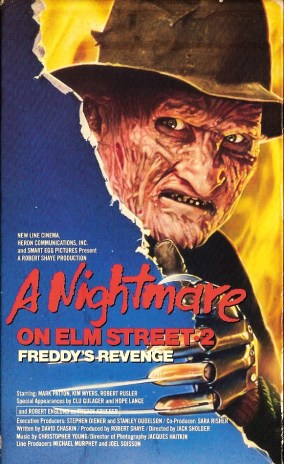 I don’t think it helps that my first exposure to these films was A Nightmare on Elm Street 2: Freddy’s Revenge, where Freddy seemed particularly more vicious than I’d see in the later films (though the first classic one was also a pretty good horror film on its own thanks to Robert Englund’s performance). Not only was he killing people in their dreams once they fell asleep–a terrifying enough premise all on its own–but he was also possessing one particular teen-aged character once he fell asleep in order to do it. In any case, the terrifying, claw-gloved antagonist of this series would go a long way in making sure I resisted the urge to fall asleep as much as possible for many years. It probably helps explain why I’m such an effortless night-owl by default.I’d thought I wouldn’t be able to take Freddy seriously when they made him more of a clownish killer in the later Nightmare movies, but Wes Craven’s Final Nightmare did a good job of establishing how and why this character existed, and temporarily renewed my interest in him. I wish they would have explored that when they rebooted by series a few years ago, but unfortunately they didn’t, and I was left wanting for another good Nightmare film. Hopefully someday, someone with the right skills can come along and make Freddy frightening again.
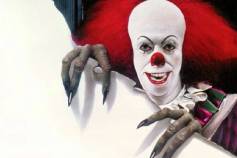 This film, along with honorable mention Poltergeist, is no doubt responsible for more than a few people’s irrational fear of clowns, though I myself never succumbed to this. And with Tim Curry’s simultaneously comical and vicious portrayal of the character (or rather, the main physical manifestation of said character), it became one of the movies that came quickest to mind whenever I thought about things that scared me. A creepy… no, scratch that–terrifying clown, who you couldn’t even really kill, and who could psychically torment you across distances? A monster in disguise made to lure children to their doom? Yep, I’m pretty sure that’s pure, unadulterated nightmare fuel.
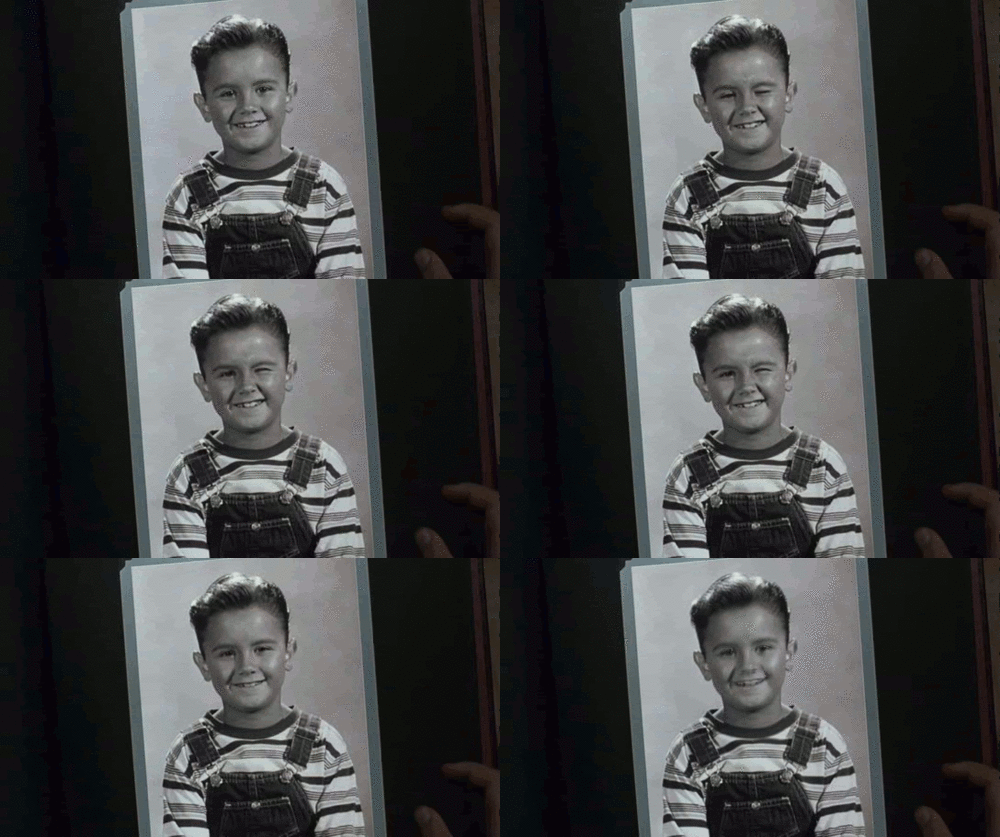
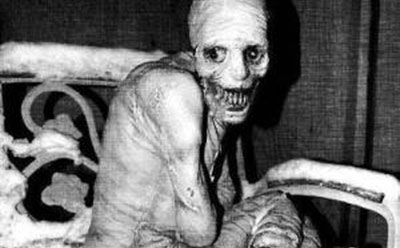
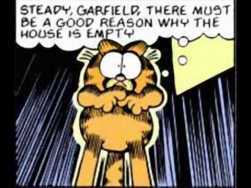 I remember reading this series of comic strips during a week in October when I was around 10 or 11, and it was a harrowing experience to say the least. For a comic that had had a consistent style and premise, both of which revolved around the life and antics of a surly, lazy cat and his companions, this abrupt shift in tone and mood was unsettling from the get-go. The premise, that Garfield was in fact a lonely, starving cat who lived in a dilapidated and crumbling house, and that his actions with Jon and Odie in the warm, well-kept abode readers had come to know are merely the self-delusions of an individual suffering from starvation and extreme denial, left an indelible mark on my appreciation for Jim Davis to tell a good horror story when he wanted to.There’s an
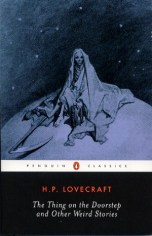 This isn’t the most famous of HP Lovecraft’s stories, and certainly suffers at times from his tendency to over-verbalize, but this first exposure to his works instilled in me both a love for the writer and a visceral sense of terror at this story’s premise. It mostly comes down to the central premise about the story being about possession, and the extremes of one particular entity’s willingness to take over the bodies of others, but there are other elements and themes of this story that creep me out as well. That this little gem of a horror story both begins and ends with the author’s imprisonment in a mental facility leaves the reader more than a little discomfited at the entire experience, which is exactly how you should feel when reading Lovecraft. Well done, Mr. Lovecraft. Well done.
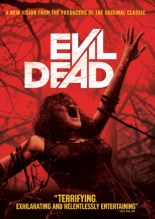 In the last decade or so, there have been a slew of remakes of old horror films that have really driven home the scares. Not that the originals aren’t perfectly hair-raising on their own–I can recall more than a few of them keeping me up at night–but the sheer level of visceral terror involved in such films as Rob Zombie’s 2007 remake of Halloween and Fede Alvarez’s 2013 reimagining of The Evil Dead just make it seem like the creators were really out to get moviegoers. There’s also no doubt that with the advances in movie effects, films such as these are ripe for an upgrade.
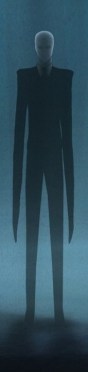 I pretty much couldn’t close out this list without mentioning Slenderman (a.k.a. the Slender Man), whose emergence onto the internet and into the collective consciousness of a generation has been both fascinating and horrifying to behold. The unnaturally tall, thin, blanked-faced character dressed in a black suit tends to stalk, abduct, and otherwise traumatize people, disrupting video feeds and often causing others to disappear without a trace. Having only graced the internet with his presence since 2009, Slenderman is a very new phenomenon that demonstrates just how powerful a well-conceptualized image and premise can be online.It’s Slenderman’s fame in particular that intrigues me, as he’s basically gone from a nonexistent thing that has no influence on the world to a nonexistent thing that now exists very strongly in the minds of others, and who very arguably influences the world in which he doesn’t exist, fitting the definition of an egregore. This is very evident not only in the number of stories, creepypastas, artworks, video games, and other multimedia in which the character continues to pop up, but also in the unfortunate
  Closely related to Slenderman is the web series
 I’m not one to go around starting fights. I prefer Marvel to DC, but again, I’m willing to give them credit when and where it’s due. More importantly, I’m actually rooting for the DCEU to be as successful as the MCU, even though I think they are far behind in terms of execution at this point. I want them to have a tentpole franchise they can be proud of. I am not willing to lower myself into a mudslinging fight that we see so often, both online and in pop culture forums, where one side is yelling “MARVEL SUCKS!” and the other is yelling “DC SUCKS!” as loud as they can. It’s pointless and puerile, and I want no part of it.



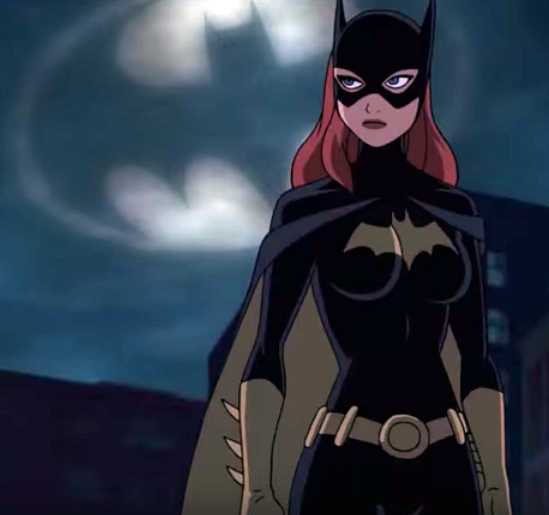
 Batman enthusiasts may have recently noticed a controversial headline or two about the highly anticipated home video release of Batman: the Killing Joke. Starring the beloved voice talents of Kevin Conroy and Mark Hamill, this classic story was hailed as one of the seminal tales of the Batman mythos in the 1980s, and is credited with moving the Dark Knight into dark territory with its violent plot and surprisingly tragic (possible) backstory given to the Joker. One of the most impactful developments in the story involves the crippling of Barbara Gordon, who up until this story had been Batgirl, and whose horrific treatment at the hands of the Joker lays the groundwork for her eventual rebirth as the wheelchair-bound superhero, Oracle.
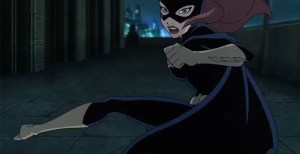 However, with that said, I like a lot of the other issues raised by this part of the story. Barbara’s exploration of her role as a crimefighter takes a compelling turn when the nephew of one of the mob bosses becomes obsessed with her. She scoffs, like I would guess any young vigilante would, when Batman tells her she’s not taking a dangerous situation seriously enough. Her enthusiasm balances her uncertainty, with which she does struggle in a believable fashion. What her mentor thinks of her, what lengths criminals will go to in order to get what they want, how she handles stress and surprises in their line of work—these are all issues she encounters, and deals with in ultimately relatable ways. It’s only when the romantic/sexual/infatuation elements come into play that things come off as contrived or off-putting.
 There is, of course, more to this film than the changes that were made to the story, and I’m giving them such short shrift because, for the most part, they’re fine, and we all know what to expect from them. The script is nearly line for line accurate to the comic, and the animation and voice acting is all top-notch. I even didn’t realize in the original comic that Joker actually sings during one phase of his tormenting the elder Gordon. It’s certainly not a bad adaptation. I just happen to think the changes surrounding Barbara’s character are the most significant part of the story, and that they bring both positive and negative elements to bare upon the narrative.
 Spidey Librarian