Fandoms: Learn to Play In the Sandbox Together, or Get the Hell Out

Don’t expect to insult my fandom to promote yours and expect we’ll be friends for very long.

There.  I needed to say that, and get the venom out.

I like to think I’m a pretty accepting person, all things considered.  I prefer Marvel comics to DC comics for the most part, though I’m perfectly willing to acknowledge when certain DC stories get things right that Marvel either doesn’t or hasn’t in some time.  I like both Star Wars and Star Trek, and don’t understand why people have to choose one or the other.  I like Doctor Who at certain stretches, and am not so hot on it for others.  I love Firefly.

And there are plenty of other fandoms I like.  There are fandoms I’m not so hot on.  There are plenty of fandoms I just haven’t had the opportunity to explore, and may or may not discover in the future.  And I’m fine with all of those things.

You like My Little Pony?  Wonderful.  It’s not my cup of tea, but it works for you, and that’s what’s important.

But one thing I’m not okay with?  Don’t ever insult my fandom to try to make yours seem better.  I will knock you flat on your ass if you do so.

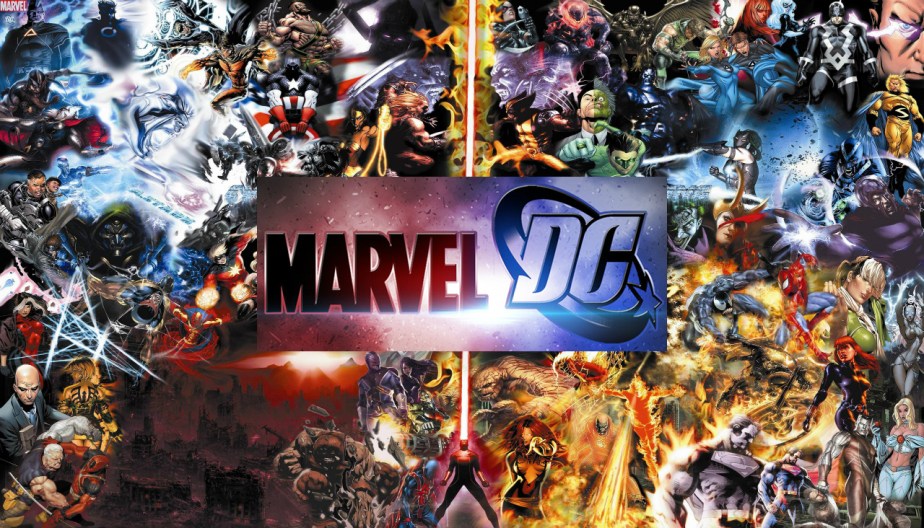
Lately I’ve seen a lot of material online that denigrates Marvel and simultaneously extols DC.  Tawdry, sensationalistic, clickbait-y headlines and memes that use the Us vs. Them premise to lure readers into their pointless and often terribly written content.  Typically, when I see dreck such as this, I generally just roll my eyes and keep going.  But lately I’ve seen enough of it, as well as re-postings of it from people I actually care about, that it’s starting to impinge on my overall enjoyment of my fandom.

This, friends, is not acceptable.
does-marvel-appreciate-their-fans-more-than-dcI’m not one to go around starting fights.  I prefer Marvel to DC, but again, I’m willing to give them credit when and where it’s due.  More importantly, I’m actually rooting for the DCEU to be as successful as the MCU, even though I think they are far behind in terms of execution at this point.  I want them to have a tentpole franchise they can be proud of.  I am not willing to lower myself into a mudslinging fight that we see so often, both online and in pop culture forums, where one side is yelling “MARVEL SUCKS!” and the other is yelling “DC SUCKS!” as loud as they can.  It’s pointless and puerile, and I want no part of it.

And I expect the same treatment from those around me.

You want to think Marvel sucks and DC buries it?  Go ahead.  Think it all you want.  But the moment you open your mouth and say something to that effect and insult my fandom, you and I are going to have problems.

It’s fine if you prefer DC to Marvel.  It works better for you, and Marvel works better for me.  There’s no reason to start insulting the other.  It’s a big, wide, wonderful world, and there’s plenty of room in the sandbox for everyone to play.  I don’t understand why people feel the need to tear others down in order to make themselves feel better, but one thing I can do is refuse to tolerate it.

So consider this a warning, dear reader.  You’re free to disagree with me all you want.  You don’t have to like what I like, so long as you express your disagreement respectfully.  I will never trash talk your fandom or franchise, and I think it’s not asking too much to expect the same from others.

The moment you put a foot out of line and spew bile all over a thing I hold dear, you can expect to be warned, once.  After that, if you continue, expect that I will censor the hell out of you.

It’s not about having a different opinion.  It’s about being able to disagree like adults.  If you don’t know how to do that, don’t expect me to hold your hand.

I’ll just show you the door.english-idioms-show-the-door-300x194

Oh, and one addendum: this cuts both ways.  Marvel fans insulting DC fans, for example, will also be shown the door.

Play nice, everyone, with everyone.
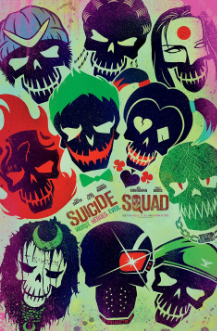
Suicide Squad Inspires Wide Range of Reactions, Thoughts About Film Reviews

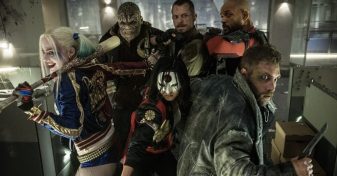
To be honest, the most intriguing characteristic of Suicide Squad, the film of DC villain misfits cobbled together to serve a kind of black ops kill squad for the government, is the wide-ranging spectrum of feedback it has received, and the fallout that’s resulted from it.  The film itself, while not particularly remarkable, makes for an entertaining, serviceable-enough action romp that’s garnered itself the dubious distinction of being a more watchable part of the emerging DC Extended Universe than its two predecessors, 2013’s Man of Steel, and this year’s Orphan Fight: The Movie, aka, Batman vs. Superman.longrange061015-860x450_c
After watching this film on Thursday and taking the rest of the weekend to simply scroll through all the reactions to it, I find myself mystified by a number of developments around it.  Off the top of my head, here are a few of them.

  1. This movie does not deserve all the hate it’s been getting.
    I know I’m not the only one to say this, and the weekend box office projections will certainly back that up, but it looks like Suicide Squad is going to break records despite the sheer ferocity with it’s been attacked by critics from all sides.  I’ve seen terrible review after terrible review, roundly lambasting it for its flaws–of which, make no mistake, it has quite a few–but rarely giving it credit for the things it manages to get right, or dismissively glossing them over when mentioned at all.  An actual viewing of the actual film leaves me with the impression that some critics are all too eager to see this film fail, and are giving it much shorter shrift than it deserves.

    However, by the same token…

  2. Critics are not beholden to justify their ratings or placate fans.
    Okay, wow.

    I realize Rotten Tomatoes isn’t without its critics and detractors.  I realize that fans will want to defend a film they want to succeed–and it’s clearly the fans who are making Suicide Squad successful, which I wholly endorse.  But starting a petition to shut down a website whose stated purpose is to rate and critique films that are released is taking things waaaaay too far.

    Film critics and reviewers, while they can tend to see a film through a lens that can at times paint them as snobbish or pretentious, are, at the end of the day, individuals commenting on a movie, the same as you and me.  Rotten Tomatoes itself doesn’t rate films–it collects the many reviews it gets from its film critics and uses an algorithm to determine the movie’s score from those reviews.  Bottom line: it’s a tool that gathers data, crunches numbers, and spits out a rating.  If you have a problem with the score given to Suicide Squad, you have a problem with the individual critics who reviewed it negatively–not Rotten Tomatoes itself.  This is an important distinction to realize if you want to be taken seriously.

    With that said, it’s important to realize that film reviewers are not required to change their opinions just because fans may disagree with them.  I’ve seen fan after fan repeat the line I heard during BvS‘s critical drubbing, that Disney/Marvel was paying money to critics to intentionally sink DC films, so that they wouldn’t be able to compete with Marvel’s own films from the MCU.  There is no evidence that this has ever been true, and until shown otherwise, there’s no reason to give any consideration to such wild accusations.  Fans can disagree–vehemently, if they wish–with a reviewer’s opinion, and state as much, but after that, the safest move they can make is to walk away in disgust.

  3. The movie itself is perfectly watchable.
    And finally, I’m at the review itself.

    Suicide Squad is an enjoyable, fun film, with a talented cast and decent direction.  It does indeed suffer from a few issues–it’s unevenly paced, the villain ends up being lackluster, and there are a few supporting characters who may as well not even have been there.  None of this, however, undercuts the basic premise of the movie, which is to grab a few DC villains, throw them all together against a big bad threat, and have some fun while doing it.

    Margot Robbie, Will Smith, and Viola Davis are the standouts in this outing by far.  Robbie’s Harley Quinn without a doubt is having the most fun, and we get to see bits and pieces of her journey from Dr. Harleen Quinzel to the Joker’s main squeeze, Harley.  It’s an entertaining performance of material that is somewhat two dimensionaly written, and she brings the charm and snark with aplomb.  Will Smith’s Deadshot, surprisingly, ends up being the character through whose eyes we see the most of the plot, and identify with the most.  He’s the most heroic of an unheroic bunch, playing the straight man whose past has caught up to him in a believable fashion.  Viola Davis also turns in an amazing performance as Amanda Waller, the boss from hell who is determined to control anything and everything about her newly-formed task force.  She plays the part of cool, manipulative superior with all the magnificent bastardry that fans of the comics would expect from this character, and is impossible not to watch in every scene she is in.  The writing isn’t the best in this film, but it’s easy to see that the actors did everything they could with what they had, and I commend them for their collective efforts.

    Special mention goes to Jay Hernandez’s character, El Diablo, who is played with quiet solemnity until a particularly badass moment in the story’s climax.

    While the story tends to give the most focus to these characters, we get a few inclusions that make you wonder why they even showed up.  One character seems to only be there for the purpose of showing how severe the punishment is for trying to escape the arrangement set up by Amanda Waller.  Another character, Captain Boomerang, feels like the only reason he exists is to give an almost literal 2-second cameo to another character, and Killer Croc, Katana, while the remaining characters are given virtually no development.  I realize this isn’t easy to do in a film with this many people, but it still feels like we’re left wanting.

    The villain ends up being another nominal member of the group who goes rogue, and I can’t get over how forgettable she ends up being.  While there are a lot of nice visuals and special effects centered around this character, there’s also plenty of confusion as to how she’s able to break free on her own, as well as a lack of depth to her character that keeps her from standing out among the legion of movie villains with generic motivations.

    Plot-wise, it’s pretty easy to follow.  We get a series of origin stories as the main characters are introduced, fun to watch for their visual flair.  As the team goes on its first mission, things change in terms of tone and pacing, jarring viewers as the squad ends up fighting monsters sent forth by the villain.  There are moments of humor mixed in with the action, and while the plot spirals into your standard boss battle finale, it’s carried through with enough irreverance to be satisfying.

    You might notice I’ve said nothing about Jared Leto’s Joker until now, and it’s because I don’t feel he belongs in this story.  This Joker is decent enough, I suppose, but he’s mostly outside of the narrative, and should have stayed confined to Harley’s flashback origins.  We may get to see more of him in a future movie, but I feel like he’s both underused and entirely unnecessary to the plot.

    All in all, this is a film that wants to have fun, and does manage to succeed in a few places.  It’s not the homerun I’m sure Warner Bros. wants it to be, but it’s by no means a bad film either.  However, in comparison to BvS, and I would argue Man of Steel, it’s leaps and bounds ahead where tone and overall enjoyment are concerned.  Hopefully as the DCEU moves forward, its films will get increasingly more entertaining and memorable.  Suicide Squad is definitely a step in the right direction, even if it doesn’t quite succeed at the level to which it aspires.

In this age of the internet and social media in which we live, it’s more important than ever we keep vigilant about the headlines we see.  As Suicide Squad has shown, it’s very possible that you’ll experience something very different than what you read about or research yourself.

Batman: the Killing Joke – Don’t Believe Everything the Naysayers Write

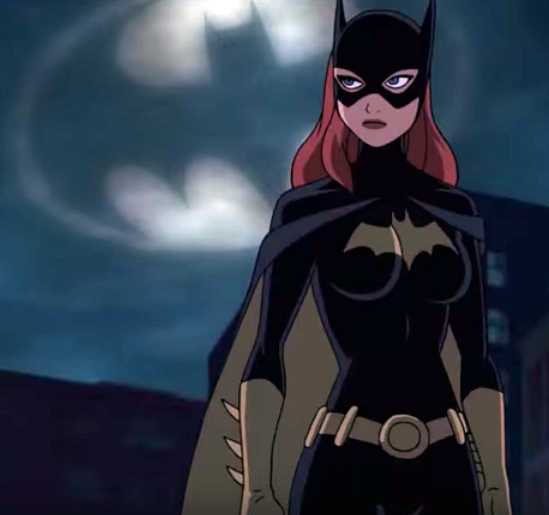
Batman enthusiasts may have recently noticed a controversial headline or two about the highly anticipated home video release of Batman: the Killing Joke. Starring the beloved voice talents of Kevin Conroy and Mark Hamill, this classic story was hailed as one of the seminal tales of the Batman mythos in the 1980s, and is credited with moving the Dark Knight into dark territory with its violent plot and surprisingly tragic (possible) backstory given to the Joker. One of the most impactful developments in the story involves the crippling of Barbara Gordon, who up until this story had been Batgirl, and whose horrific treatment at the hands of the Joker lays the groundwork for her eventual rebirth as the wheelchair-bound superhero, Oracle.
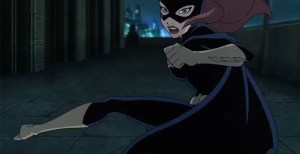
Right before the film’s release, news websites began posting about a significant change to the character of Barbara Gordon in the animated film, particularly involving her relationship with Batman. Cast as a problematic and unwelcome development, the news centered around the introduction of Barbara, as Batgirl, having a sexual relationship with Batman during the course of the film. Taken as is, these headlines could easily leave Batfans in a state of acute pique, especially any source material purists who don’t recall any cannon relationship between the two of them.

At first, I jumped on the bandwagon that mocked and rolled its collective eyes at this news. Many of my friends reacted, making statements to the effect that Barbara couldn’t possibly have any worth in this story unless she was a damsel in distress to give Batman some man pain to motivate him to fight the Joker. And, at first, I joined them.

After having seen The Killing Joke in theaters this week, I’m of the opinion that the first third of the film, which is told from Barbara’s perspective, is a problematic but ultimately necessary subversion of the original story by Alan Moore. After it moves into the conflict between Batman and the Joker, Barbara is essentially abandoned after the Joker shoots, cripples, and sexually violates her. She is effectively a prop, an easy example of Women in Refrigerators whose sole function is to raise the stakes for the men in the story.

Isn’t that a biting indictment of a story? Barbara gets mutilated, and the story is not even about her.

In hindsight, Alan Moore holds no love for this event, if his interviews are to be believed. Of the contrarian opinion that The Killing Joke isn’t a very good story of his, he also mentions that DC editorial’s decision to let him cripple Barbara was a mistake, one where they should have “reined [him] in,” but failed to do so.

The Killing Joke, as Alan Moore wrote it, is essentially about Batman and the Joker, and to a lesser degree, about Jim Gordon. It’s not about Barbara, her struggles as Batgirl, or even her triumphant attainment of the Oracle mantle. Yet it’s absolutely integral to her evolution as a character, because of what is done to her. For that reason alone, I don’t take issue with the film creators’ decision to inject her perspective into the beginning of the narrative. Given the enormity and tragedy of what is inflicted on her in the course of this story, this deserves to be her story, too.

With all of that said, however…

I think the decision to make Barbara infatuated with Batman didn’t do the character any favors. It’s the sole, stark issue I have with this part of the story, for a number of reasons. Comic book continuity aside, Barbara has never struck me as a person who needed Bruce or Batman to complete her identity as a person; she had always been an independent, resourceful woman whose inexperience was often counterbalanced by her cleverness and intelligence. The idea that she would pine after her mentor in crimefighting—her “yoga instructor,” as she codes to her gay best friend when dishing about guys—is also more than a little disturbing.

the-killing-joke-batgirlHowever, with that said, I like a lot of the other issues raised by this part of the story. Barbara’s exploration of her role as a crimefighter takes a compelling turn when the nephew of one of the mob bosses becomes obsessed with her. She scoffs, like I would guess any young vigilante would, when Batman tells her she’s not taking a dangerous situation seriously enough. Her enthusiasm balances her uncertainty, with which she does struggle in a believable fashion. What her mentor thinks of her, what lengths criminals will go to in order to get what they want, how she handles stress and surprises in their line of work—these are all issues she encounters, and deals with in ultimately relatable ways. It’s only when the romantic/sexual/infatuation elements come into play that things come off as contrived or off-putting.

In short, I think the headlines many websites and publications used to sensationalize this development were misleading and manipulated to generate clicks. Surprise, surprise, I know. But I think anyone who was excited about this movie and then put off of it because of the headlines owes it to themselves to see it for themselves. I myself was guilty of judging the film based on those headlines, and while I won’t rate The Killing Joke as one of the best animated Batman films I’ve seen, it’s certainly nowhere near as bad as the naysayers would have you believe.

maxresdefaultThere is, of course, more to this film than the changes that were made to the story, and I’m giving them such short shrift because, for the most part, they’re fine, and we all know what to expect from them. The script is nearly line for line accurate to the comic, and the animation and voice acting is all top-notch. I even didn’t realize in the original comic that Joker actually sings during one phase of his tormenting the elder Gordon. It’s certainly not a bad adaptation. I just happen to think the changes surrounding Barbara’s character are the most significant part of the story, and that they bring both positive and negative elements to bare upon the narrative.

It’s definitely worth a watch, if for no other reason than as a lesson that you can’t always trust the headlines you see on the internet.

Spider-Man: Homecoming Set Photos Takeaway: I Want That Backpack

Yesterday Looper, an entertainment website, put up some photos fresh from the set of 2017’s Spider-Man: Homecoming showing actor Tom Holland in his Spider-Man costume.  They’re pretty good, and aside from showing a clearly less-shiny version of Spidey’s costume from Captain America: Civil War, provide a clear glimpse of a backpack presumably used by the character both for high school and hero-ing.

The fact that this is a fairly plain JanSport backpack actually makes me really happy, as whenever I cosplay Spidey at conventions, I usually have had bags that I carry (because hey, gotta keep that spare set of civvies nearby) and fish through when I need something in them.  While I haven’t actually carried one in a few years, I’ve always felt a backpack was an appropriate thing for Spider-Man to carry around.  Clearly writer Brian Michael Bendis and artist Mark Bagley agree with me (or I with them), as Peter Parker from the Ultimate Spider-Man comics also carried around a backpack with some regularity.

I’d also argue that if you’re going to be a masked, anonymous vigilante with superpowers who wants to keep his identity secret yet still carry a backpack, you’re best going with a commonly carried, plain-colored backpack that will be hard to easily identify as belonging to just one individual.  Still, in this day and age of social media, mobile phone cameras, and Instagram, it’s probably not going to throw people off that easily.

In any case, yeah, I now want one of those things.  I’ve actually wanted one for a while, but now even more so.  Maybe not in that color, but definitely for my cosplay purposes at the least.

I can’t wait for 2017 to get here.