As the fourth season of Agents of S.H.I.E.L.D. officially kicks off tonight, I figure it’s timely for me to give voice to the things I love–and don’t really love so much–about this show. It has the distinction of being the only broadcast television show I follow faithfully, and its status as a Marvel Cinematic Universe property may have more than a little to do with that. Everything else I watch is usually either Netflix (hello Daredevil, Jessica Jones, and soon Luke Cage!), some other streaming service, after the fact, or some blend of the three.
So why is it that Agents of S.H.I.E.L.D. gets this extra effort from me? Is it that I’m an MCU junkie, who just doesn’t care what it is, as long as it has the Marvel IP attached to it? Do I strive for interconnectivity between the movies and the shows, despite how little of it we actually see? Have I actually grown attached to some of these characters and storylines, many of whom are not born from the comics?
If you couldn’t already tell, the answer is a little bit of all three.
 Agents of S.H.I.E.L.D. got off to a bumpy, if charming start, banking on the likability of its characters as much as Phil Coulson’s “connection” to the films. People tuned out after a couple of episodes, and the main complaint at the time seemed to be its lack of utilizing flashy, powered characters from the comics that weren’t being used in the films. I remember seeing more than a few commenters upset that Mike Peterson didn’t turn out to be Luke Cage during the first episode, for instance.
While I understand the desire for this from comic book fans, I don’t consider it a very legitimate criticism, as S.H.I.E.L.D. has always been a spy organization first and foremost. The premise of this television show was therefore primarily a spy drama. How non-powered people handle life in this reality should be, and I feel has been, a primary thread of exploration in this series, even when the show doesn’t always acknowledge it.
I will admit, during this initial stretch of episodes is when the show seemed to be at its weakest. The pacing was sometimes slow, and there seemed an over-reliance on why Coulson was still alive, and was dragged on longer than it needed to be. Still, the group dynamic between the characters, from orphaned protagonist Skye to stoic badass Melinda May to the bantering British duo of Leo Fitz and Jemma Simmons, made for a fun enough ensemble that I cared enough to keep following their evolution as a group and a team.
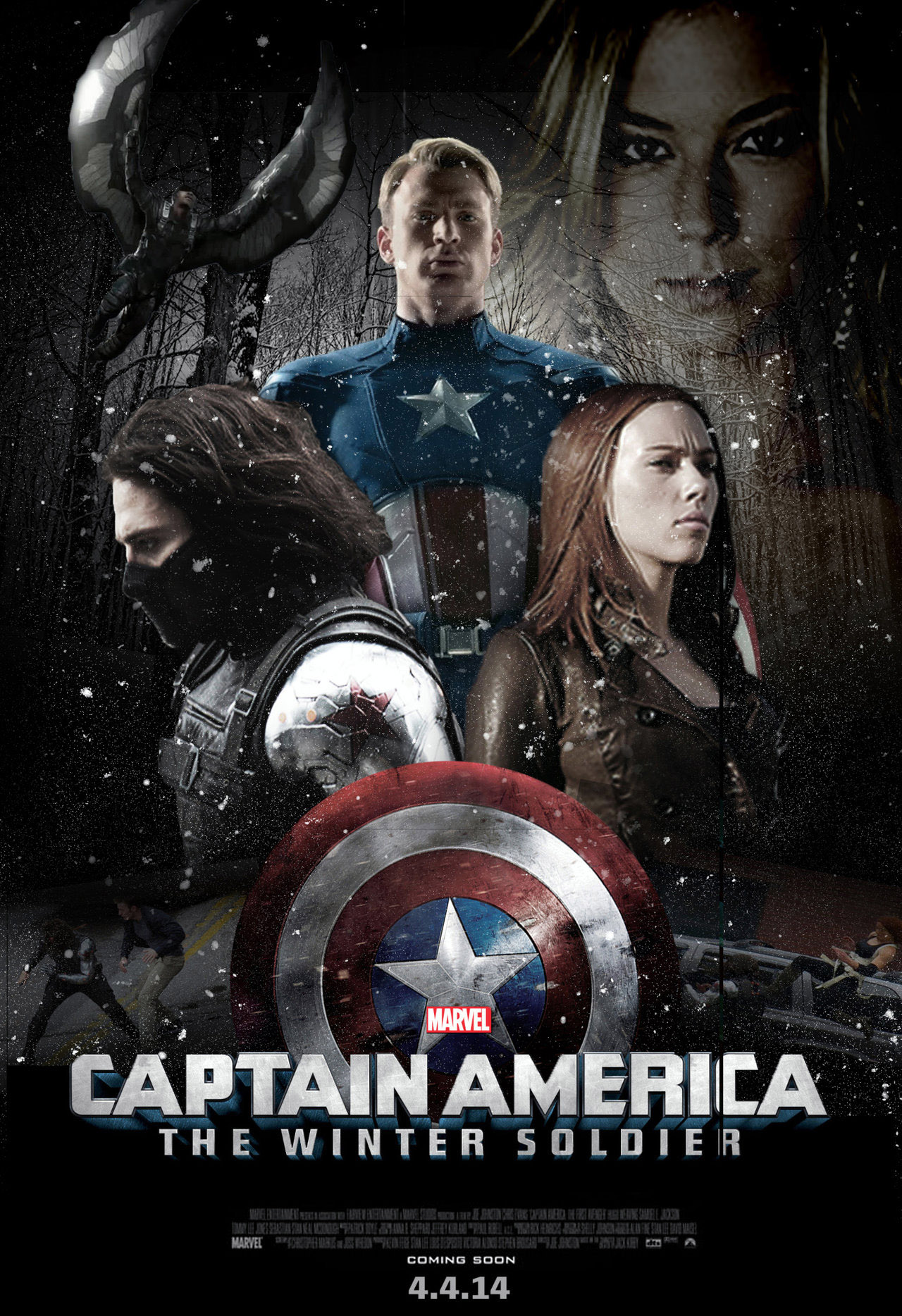 Then, those of us who did stick around learned something important about season 1: it was, by necessity, hamstrung on what it could explore in relation to the movie studio to which it was connected. Even so, there were glimpses and flashes of what the show could be in some of the earlier episodes, such as “Eye Spy.” When Captain America: Winter Soldier blew the lid off the first season, Agents of S.H.I.E.L.D. became a lot stronger and more action-packed in its storytelling, and I would argue has maintained a compelling narrative ever since.
The end of season 1 brought about some revelations, as these kinds of shows tend to do, and we got to explore them in the second season. Skye, we find out, is (and has always been intended to be) Daisy Johnson, a character from the comics known as Quake. Her origin has been changed from a mutant (mutants don’t exist in the MCU due to Fox having the film rights to them) to an Inhuman, and her Inhuman origins are explored. Several new characters and arcs are introduced, including one of my personal favorites, Mack, who proves both instrumental in helping Fitz adapt to his new condition, and a member of a splinter S.H.I.E.L.D. group that nearly takes Coulson’s group down.
Some of the elements in this season could have been handled better. More showing instead of telling, for instance, about the Inhumans, their history, and their abilities. Coulson’s need to draw alien symbols also could have benefited from a stronger explanation that wasn’t dragged out for as long as it was. And don’t get me started on how they handled Fitz’s injury and eventual recovery from season 1. It was entirely too quick and clean, and ultimately should have been one of the few things that took significantly longer than it ended up taking.
 On the other hand, there are plenty of strengths to this season. Daisy (not Skye anymore!) meets and ultimately has conflicts with both of her parents, leading to a final showdown that is both heartbreaking and memorable. Bobbi Morse (Mockingbird!) is introduced, and is wonderfully played by Adrianne Palicki, as is Nick Blood’s character Lance Hunter. Mack and the “other, real S.H.I.E.L.D.” storyline was also memorable, particularly as well as actor Henry Simmons played his scenes. And the Inhumans situation is brought to a head at the end of the season, setting up a good portion of the themes in season 3.
Season 3 had more good points than not so good, in my opinion, but its exploration of the history of Hydra and its link to the Inhumans (and the Kree) was front and center here. We finally get to see the traitor, Grant Ward, die (twice!), and the fifth episode, “4,722 Hours,” stands out as quite possibly my favorite episode of the entire show so far. Coulson starts working with a legitimate arm of the U.S. government, and eventually begins a romance with its head, Rosalind Price. Her sudden and cruel death was one of the moments I disliked most about the season, as they’d done a good job of making her likable, and Coulson’s reaction to it had all the classic signs of Women In Refrigerators that we see in comics so often.
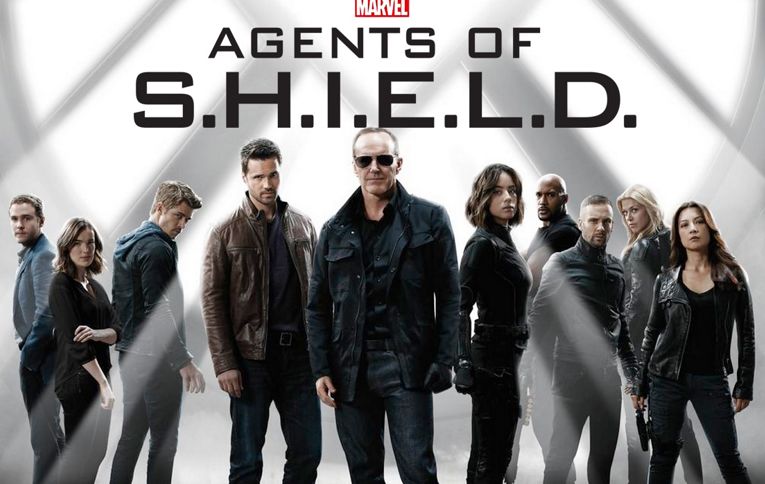 Ward’s “evolution” into the character Maveth made for a legitimately world-ending threat, pressing S.H.I.E.L.D. to its limits as they finally broke out the Secret Warriors. Several excellent Inhuman characters comprised this team, including Joey Gutierrez, who can melt metals, and Elena Rodriguez, a speedster. When that threat is finally taken care of, Hydra seems to finally be obliterated, and the focus of the show may seem to finally shift from Inhumans to… Ghost Rider?
As we head into season 4, I’m as excited to see Robbie Reyes’s Ghost Rider as a number of people are upset that it’s not Johnny Blaze’s motorcycle-riding demon. I think their use of a newer character with less history to “stick to” opens up a lot of narrative possibilities that could make for great storytelling. I’ve not read any of his comics, yet, but I’ve heard good things about it, and have been pleased with the glimpses of the character we’ve seen thus far.
I’m hoping I’ll be hooked enough on him to start looking for his comics. I’m hoping this season of Agents of S.H.I.E.L.D., with its new time slot, proves to be its strongest yet. If it goes darker, as I believe it will, I think we’ll have another strong base from which to improve an already good show.
If you haven’t watched Agents of S.H.I.E.L.D.–or even if you watched it at first and dropped off soon after–give it a watch this season. I’m more convinced than ever this show is going to be a great (ghost) ride! (no apologies for the pun!)

 It will likely be a while, though. At the New York Comic Con, it was announced that 2017 would be a full one for Marvel Netflix, with three shows on the schedule for next year. Iron Fist has had a release date of March 17 confirmed, with The Defenders–which will combine characters from the four preceding shows–likely to release during the middle of the year. Likely at near the end of the year will be The Punisher, whose main character Frank Castle was one of the highlights of Daredevil’s second season.
 Anyone who knows me can tell you that I’m a big fan of the MCU that Marvel Studios started back in 2008 with Iron Man and The Incredible Hulk. I love the interconnected nature of the movies, and how they reinforced the notion that these were characters whose actions would affect the plots and developments of others that came along. It was a brilliant way to conceptualize and bring together a movie franchise, and it was so uniquely a Marvel opportunity, that I knew their film The Avengers was going to be a huge hit, even as far back as Iron Man, when it was only being hinted at.
 With the ever-present phrase “It’s all connected” a seeming mantra of the entire universe, it seemed a no-brainer that there would be plenty of connections, however tenuous, between the films and the shows that emerged on ABC and Netflix. And as far as Agents of S.H.I.E.L.D. has been concerned, they’ve made plenty of references to the films to show they’re connected, from having some of their stars (Thor‘s Jamie Alexander, The Avengers‘ Cobie Smulders and Samuel L. Jackson, and Captain America: The First Avenger‘s Haley Atwell jump quickest to mind) appear on the show, to having episodes and plot arcs made in direct response to the events of the films. Netflix shows Daredevil and Jessica Jones have made small, oblique, blink-and-you’ll-miss-them references to the films, but thus far have mostly kept to themselves in terms of really connecting to anything else.
 Come on, Marvel Studios. Would it really be that hard for you to do that little?
 Spidey Librarian