Hello, From Behind

Last year, while I was writing a two-sentence horror story for every day of the month in October, I put to publication one particular experience that I denoted as being completely NOT a work of fiction.  It was the closest to an actual paranormal experience as I’ve ever had in my admittedly dull and at  times dreary life, and it’s something I’ve never forgotten.  I wanted to expand on that experience a little, and tell it in a narrative fashion that allows me more detail than the quickie I wrote a year ago.

I had been home from college for the summer, and between school years worked a job as a host at a family restaurant.  This establishment typically never closed, which meant I often ended up working the night shift.  Being a natural night-owl, I had no problem with this, and often ended up working from 9 or 10 in the evening until 4 or 5 in the morning.

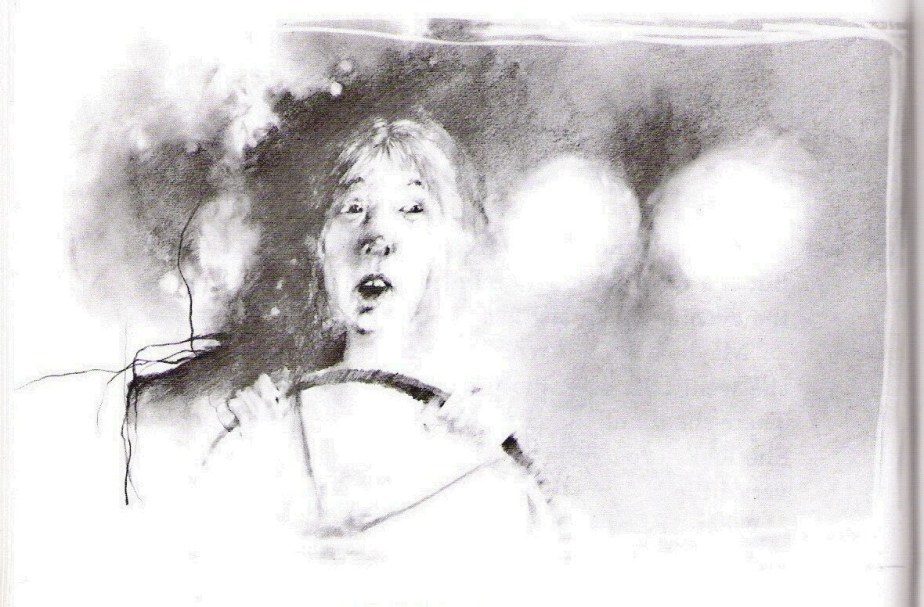
I had just gotten off my shift one night, at about 4 a.m.  I did my typical check of the back seats of the car before getting in–not that the parking lot wasn’t well lit enough, but I’d read enough scary stories books about assailants hiding in people’s back seats that I figured it wasn’t a bad idea to check, just in case.  I think by that point I’d also seen the movie Child’s Play, and I seem to remember Chuckie murdering one of his victims by stowing away in the back seat of his car and stabbing him through the chair.

So, yeah.  No big deal.

I start the car, and pull out of the parking lot and onto the highway.  The restaurant I worked at was nearly at the intersection of two busy state highways, so I usually got on one to turn onto the other.  It’s a fairly simple, but large turn, as there are a lot of lanes on both roads.

It was as I was making this big turn that I heard a clear, friendly baritone voice speak, its two words sending ice down my stomach.

“What’s up?”

As the fear shot immediately through me, I flicked my eyes towards my rear view mirror, searching frantically for the source of the utterance.  Otherwise, I didn’t move a muscle, aside from what I needed to do to complete the turn.  When I saw no one there, I had a brief, panicked thought: was Chuckie about to stab me through the driver’s seat?  Was there someone so small in the back seat of my car that I had missed them when I checked?

All of this occurred in the flash of an instant.  As I completed the turn onto the next highway, I found the only reply I felt I could make in this situation, and turned in what I hoped was a casual motion and responded, “Not much, how are–”

That was all I got out before I was able to get a firsthand view of my back seat.  No one was there.  There was also no small person or thing hugging the back of my seat, either.  I was alone, and as best I could tell, I was safe.

I finished the drive home without incident, but I didn’t end up going to sleep until much later in the morning.

I am not, to my knowledge, given to hallucinations of any kind.  It might be easy to say that I was just tired, and that my senses were shot, but I’m both a natural night person and was used to doing my duties at the restaurant.  I didn’t have the radio on before the encounter, so it couldn’t have been that either.

The only explanation I have, that makes any  sense to me, is that I got a very, very brief visit from a ghost on the highway, who either vanished before I could get a look at him, or who just spoke briefly to me that one time, as if in passing.

October Is Upon Us

In a few hours October will come, promising a month of chills, scares, and shorter days.  It’s a time when things really seem to relax for me, and as my favorite festive holiday comes on the final day of the month, my brain turns inevitably to horror.  Scary stories, scary movies, and scary video games, as well as what creations I can contribute in that vein.

Last year, I managed to write a two-sentence horror story every day of the month, and while I feel that was pretty successful, it’s an activity I don’t feel inclined to repeat this year.  I still want to write, and I want to do something in the scary stories department, so I think I’m going to try something a little different.

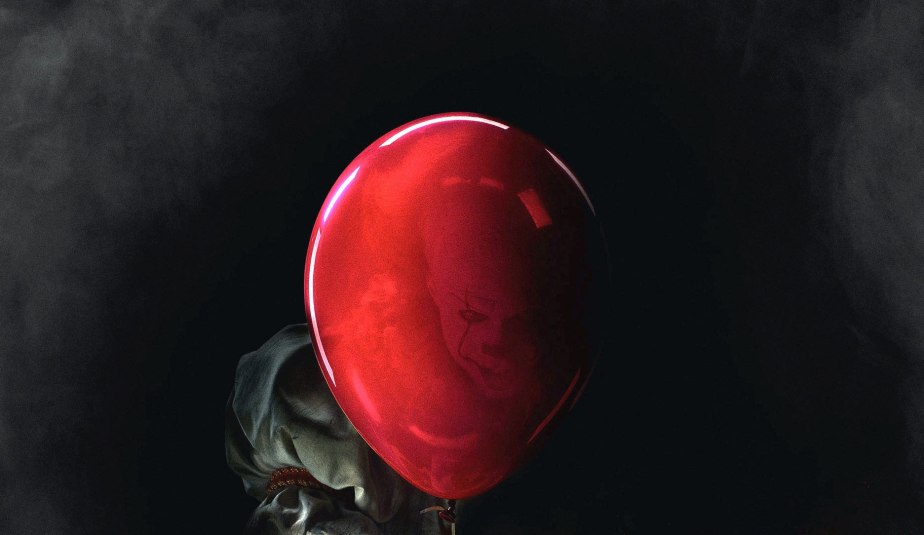
Lately, I’ve been pondering my own “creepy clown in the woods” story.  Yes, no doubt due to the influence of It, but also because clowns have always fascinated and frightened me.  This year, I think I may dedicate October to this story, and I have a number of exercises I’d like to try out as I develop it, first into a one-page story, and hopefully into a more fully realized short story.

Since I’m not exactly sure which exercises I’ll be doing, or when, I don’t have a real schedule to share with you.  But you can bet I’ll be covering the basics: the title, the characters, the plot and setting.  Hopefully by the month’s end I’ll have the full short story finished, and can share it with those of you who would like to read it.

I’ll post updates as able.  Until then, enjoy the month of October 2017.  I certainly plan to.

Angel‘s “The House Always Wins” and Pissing It All Away

Angel, like Buffy the Vampire Slayer, as well as so many other good shows throughout television history, still occasionally suffered from the odd episode that was clearly filler and failed to really connect with fans.  “The House Always Wins,” the third episode of season 4, was one such installment, but it has one particular plot device that still speaks to me today, which I feel somewhat redeems what is generally regarded as an uneven, bland episode.

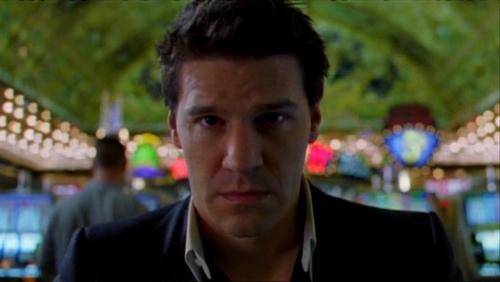
The Spin-and-Win, a gambling wheel rigged by the episode’s villain, the casino owner Lee DeMarco, is only accessible by guests chosen by the casino.  DeMarco uses Lorne’s ability to read people’s auras and see their futures, and with this information, chooses the ones with the most profitable destinies.  They are given a special gambling chip to play the Spin-and-Win, with a million-dollar prize as the lure.  When his mark takes the chip, it is imprinted with that person’s future destiny, and when they inevitably lose, they are left virtually mindless, their destiny taken away along with their ambition, and they spend the rest of their lives in a dull haze, listlessly spinning away quarters in the casino’s slot machine.

Most fans feel this is a pretty heavy handed attempt to equate gambling with throwing away one’s future, and while that’s not a completely off-kilter supposition, it’s one I never really connected with gambling in spite of the context.  The Spin-and-Win, along with its devious ‘destiny chip’ component, may have existed in a casino, and been in the purview of gamblers and those who loved games of chance, but to me the symbolism went a lot deeper.  The trap that the Spin-and-Win represented could take any form, and entrap just about anyone, as long as they obsessed enough about it.

Yesterday I wrote about creation vs. consumption, and how Stephen King’s It both represented that struggle and how it’s helped inspire me to throw off (at least for now) the trappings of consumption so I can create.  The image of this thing, the Spin-and-Win, from this episode of Angel, was another of the primary motivators that came to my mind’s eye as I came to this realization.  The Spin-and-Win, in my estimation, could be anything to anyone, much like It could take on the form of anything that its victims feared.  It wasn’t just about gambling, although I suppose my vice of gaming could easily be argued to have many parallels to that pastime.

For me, the Spin-and-Win represents video games. For someone who loves food too much, the Spin-and-Win represents food.  For others, it could be sex, alcohol, television, movies, music.  More broadly, the Spin-and-Win represent excess, the overindulgence of an otherwise harmless vice that creeps into your life and steals from you.  Time, energy, devotion to otherwise creative or self-improving pursuits.  It’s an easy retreat into something that’s comforting, but otherwise and ultimately, pointless.

I admit, “The House Always Wins” is not a great episode of Angel, though I still enjoyed it just fine.  But the idea of someone throwing away their destiny because they see an easy (but rigged and unattainable) win in front of them is a powerful one that has stuck with me through the years.  It’s always been there, in the back of my thoughts, and I’ve at times wondered why that particular form of that vice stuck when there have certainly been others that may have been more apt.

Now I know why, and I’m sending up that image to pull free of my own tendency to put of creating–writing–with something easy to consume–in this case, video games.

It may not be the prettiest or most eloquent way to break free, but so far it seems to be working out well for me.

Creation vs. Consumption

Even though I’m only just now getting around to reading the novel–well, I suppose “reading” as in listening to it on audiobook–one of my favorite horror stories of all time is Stephen King’s It.  The 1990 made for television miniseries scared the hell out of me as a tween, and I loved it for it.  There was always something about Pennywise, as portrayed by Tim Curry, and more recently by Bill Skarsgard, that really succeeded in both creeping me out and eliciting a delightful sense of terror in the whole killer clown as a villainous entity.  I’d been unsettled by them before–Poltergeist jumps readily to mind–but this story really gave the trope new life in my imagination, and remains impossible to forget to this day.

I don’t know all of the lore behind It (hence the reason I’m listening to the audiobook), but I’ve certainly heard quite a bit of it, even without having read the notoriously doorstop-sized tome King wrote.  I’ve been regaled with tidbits from the more cosmically inclined pieces of lore from the story by countless enthusiasts on YouTube.  Friends who have read it have explained to me, in great levels of detail and with appropriate shock, the infamous group sex scene that has never been given life in the films.  And I’ve heard, from friends, YouTubers, and internet boards at large about how It and its characters and settings connect with the rest of King’s larger dark universe.  It’s fascinating stuff, and I plan to explore it as time and energy allow.

It’s no surprise to me that, at its heart, It is a story about consumption versus creation.  Pennywise, as the titular It, consumes the children of Derry, Maine every 27-28 years before returning to its slumber.  While It has no qualms about taking adults, It prefers children, particularly when they’re scared (the analogy of fear as a ‘sauce’ or ‘salt’ to the ‘meat’ that is the children).  It consumes, then sleeps for nearly thirty years, then returns to consume again.  Derry’s precarious prosperity seems tied to It’s existence, and even when Pennywise slumbers, It’s influence still manifests in subtle ways, which only seems noticeable to the town’s children.

Even the story’s heroes, the Losers Club, are plagued by the forces of consumption in their lives outside of Derry.  Sure, they joined together as kids to defeat It, but once they moved on they forgot each other and their shared experience.  They forgot about Derry, and It.  And though they may have made prosperous lives for themselves, none of them ever managed to have children.  The narrative suggests this is a result of It’s influence over them, even from afar, making Pennywise/It–already a consummate consumptive entity–a force that stops them from creating life of their own.

If It cannot consume the precious life you create, then you will not be allowed to create.  Pretty dark stuff.

And it’s at this point that I tie that theme into my own life, and the lives of many artists, writers, creators, and humans at large.  I learned a long time ago that, when people have free time, they basically spend it doing one of two things: creating, or consuming.  Consuming food, consuming entertainment, consuming air, water, energy, and so on.  Creation, while satisfying, is a lot harder to pull off, or at least do well: writing stories, painting, building, sculpting; hell, even cooking dinner is harder than eating it.

We rely on creators for the things we consume, and for many of us, having things to consume is all we need.  There are a ton of creators out there, of many and various things, after all.  But there are many of us who need more than to simply consume. Whether it’s a need to prove onself, or because someone has an idea or a thing they simply need to share with the world, there are creators.

For the past few months, I have not been one of them.

I’ve been caught up in the throes of consumption, and it’s not always easy to break out of them.  For me, the poison tends to be video games, which are so very entertaining, but which also aren’t exactly good for encouraging moderation in their consumption.  I haven’t written in this blog for several months, and have done little in the way of writing that wasn’t either directly related to my job, or directly related to video gaming.  I have become obsessed with having the highest score, unlocking the latest reward, or getting the latest piece of shiny equipment for my characters.

All of which, aside from the straight objective of entertainment, serves no real purpose.

I’m not saying that entertainment in and of itself is a bad thing, but when you’re putting most of your spare time into it, it becomes an obsession.  It takes you away from friends and family.  It takes you away from creating–or in my case, writing.  And ultimately, it can chip away at your soul.  Your potential for doing other, greater, things is simply sucked away.

And I’ve finally started to feel that.

I’ve known it, intellectually, for some time.  But knowing it and feeling the large swaths of time passing in idle bouts of doing essentially nothing are two separate things.  The obsessive abandon you put into consumption of a particular thing eventually wears off, and you start to realize there’s more you could be doing, if you weren’t sinking all of your time, and energy, and passion into something that wasn’t already made simply to be consumed.

I’m not saying I’m kicking my video game habit.  I’m not sure I’m strong enough for that.  But I am saying I’m aware of it enough to be apprehensive.  I’m trying to break free of it, or at the very least strike and maintain a healthy balance between my gaming and my creativity.  I’m going to try to write more, though of course I can guarantee only that right now.

Hopefully this is the start of many more successive and regular blog entries.  Hopefully I’ll be able to get a bigger chunk of my novel edited and ready for publication.  Hopefully I can find the strength to leave behind the obsessions with which I distract myself from creating.  Hopefully I can do all these things and much more.

Because hope, as Stephen King also wrote, is a good thing.  Maybe the best of things.  And while that line may not be from It, It is also ultimately about hope, and its power (along with that of friendship) to overcome darkness.

So, as I continue to listen to It, I also have hope that I will continue to write regularly, and create regularly.

Cosplays at Comicpalooza Are Always Fun

It’s amazing how people react to me when I put on a Spider-Man costume. I don’t know how many kids, teens, and adults either fist-bumped, hugged, or posed for pictures with me on Saturday at Comicpalooza, but it was a lot. I know they’re responding to the costume, and the positive associations they have with Spider-Man when they see me, and it’s always a rewarding experience.

I like to think there’s at least one part I bring to the cosplay that goes beyond just the costume, though. Striking dynamic poses and imitating Spider-Man’s mannerisms is something I’ve come to also enjoy about “being” Spider-Man. I’ve studied his movements from movies, cartoons, and video games, and do what I can to incorporate them into my disguise.

I know I’ve gotten more than a couple of good-natured giggles when I’ve crouched up on the seat of a chair, knees bent and arms gripping the front of the seat between my legs, turning my head in short, quick motions. Con-goers and fans have often reacted with surprise and admiration when I’ve crouched into a Spidey pose for a picture. I also make a point of talking in a friendly, interested manner to any little kids who notice me, something that parents always seem to appreciate.

During the con, I had one little girl, a tiny, cute little thing whom I could scarcely believe was old enough to be walking, run up to me and give me a hug. She was so far ahead of her mother that we finished the hug before the mother was able to catch up with her, so she had to hug me again in order for her mother to take the picture. When we were done, her mother was so grateful and happy that her daughter got to give her favorite superhero a hug.

Another little boy was so excited to see me, he ran to get into the picture I was taking with his older brother, yelling, “SPIDER-MAAAAAN!!” all the way until he crashed into me with a hug. It was without a doubt one of the funniest, most satisfying moments of the weekend. I high-fived both brothers afterwards, told them to enjoy the con, and wished them and their parents well as they headed off into the growing crowd.

These are the kinds of moments I live for. They’re one of the big reasons I do cosplays in the first place.

Spider-Man in particular gets a lot of love at these kinds of events, though he’s by no means the only cosplay I’ve done. Past costumes have included Nightwing, Hawkeye, the Crow, and an anonymous Jedi. I consider them all wins, as I’ve always gotten at least one compliment from an onlooker. I realize that may make my standards low, but I think as long as anyone has enjoyed the cosplay I’ve put together, then that’s all I need to know.

To say I enjoy doing cosplays would be an understatement. I look for any and every reason to put on a costume and let my nerd flag fly. Just ask any of my co-workers!

Logan Proves a Triumphant Sendoff (SPOILERS)

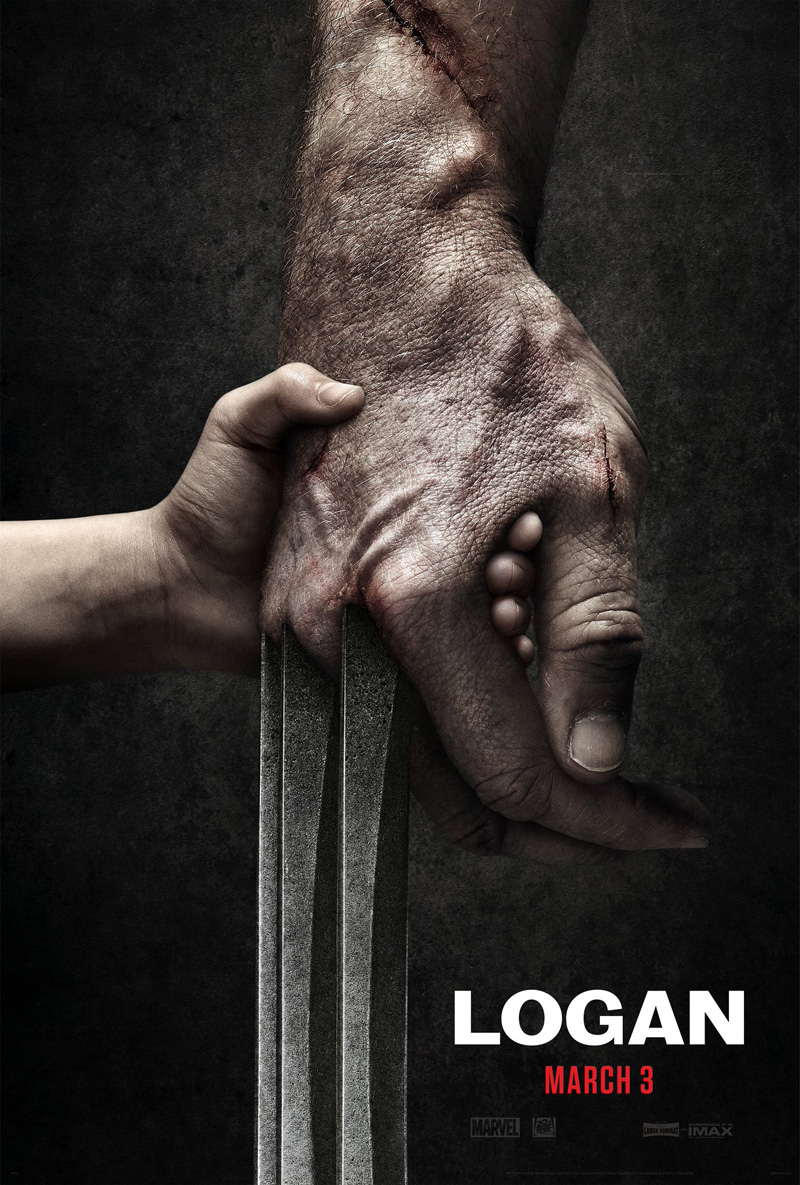
When Agents of S.H.I.E.L.D. walloped its viewers with the double whammy of the cliffhanger ending to the February 21 episode “Self Control” AND the revelation that it wouldn’t be resolved for over a month, until April 4, there were veritable howls of frustration from fans.  I immediately consoled myself with the idea that the adjoining month of March would provide me with enough fresh Marvel media content to hold me over.  Logan, which has been described as Hugh Jackman’s final performance as Wolverine, would hit theaters on March 3, and Iron Fist would drop on Netflix 2 weeks later on the 17th.

I’ve loved all of the Netflix MCU properties thus far, and I’m expecting similarly great things from Iron Fist, casting controversies aside.  But I can also say, now that I’ve finally gotten around to seeing it, that the non-MCU Logan has proven to be a noteworthy swan song for Hugh Jackman, whose portrayal of Wolverine/Logan/James Howlett has been lauded and beloved by fans and moviegoers the world over since he donned the adamantium claws in 2000’s blockbuster film X-Men.  While Fox has certainly had a hit and miss track record with its Marvel properties, there’s no doubt that Logan will be remembered as one of the biggest hits.

What follows is a SPOILER-FILLED review of Logan.  PLEASE DO NOT READ ANY FURTHER if you want to remain unspoiled for this film.

The X-Men series of films, like the comics, have never been shy about portraying the future as bleak, apocalyptic, and altogether terrible for its heroes.  What Logan does that’s both unexpected and successful with this trope is live in that future,facing down both its bleakness and the accompanying fallout, which only gets worse.  It’s a powerful slap to the viewer’s sensibilities to learn that it’s years removed from the last X-Men film, that the future is dark and foreboding, and that things are not going to be changed by a leap back in time to alter the past.  The X-Men are gone, Logan is in hiding, and mutants have all but gone extinct, with none having been born in decades.

nekttmhdhikhoo_2_bThis setup makes for a dark, gritty, and often violent story that only gets darker as the exposition continues.  An older Charles Xavier (the ever-venerable Patrick Stewart) is now prone to seizures, which cause him to psychically lash out to anyone nearby during his episodes, and Logan has to keep him both isolated and medicated, and works as a driver to try to make ends meet.  When a woman approaches him with a request for help, he is soon pulled into a chase that involves him far more intimately than he could have imagined.  Pursued by a ruthless agency, Logan and Xavier embark on a road trip that may spell the end for them, even as it delivers hope to a new generation of mutants.

One of the most gratifying, yet simultaneously saddening elements to this film is its unflinching exploration of how these characters have aged.  The film is set in 2029, which–if you count the X-Men film as being set in the year 2000–means that nearly thirty years have passed since Logan and Xavier met at the Institute.  And time has not been kind to the X-Men.  In addition to the lack of new mutants being born, and the talk of them simply being a near non-issue in this world, there are oblique references to a “Westchester incident,” which may or may not have involved Xavier.  This paints a grim picture of what may have happened to the rest of the X-Men, and though it is never directly addressed, Xavier clearly remains haunted by it, effectively leaving viewers’ imaginations to fill in the details while also making them almost too afraid to ask for the details.  It’s a big narrative risk to take, but one that pays off nicely to the story’s tone.

hugh-jackman-wolverine-logan-e1477492112271Logan has aged, in several notable ways.  He clearly looks older now, which makes sense given that Hugh Jackman himself has aged in the last 17 years.  But there’s more: his healing factor is no longer working the way it used to, and appears to be slowly failing him.  He has wounds that no longer heal, he looks older and more beaten-down, and he’s overall in a darker place.  He can’t just slash his way through a fight anymore and expect to self-patch up afterwards.  He’s playing reluctant nursemaid to Xavier, and the two have clearly had their differences during this time, even if it’s clear they still care for one another.

logan-9Of course, the most obvious way in which Logan has aged is embodied in the character of Laura (played perfectly by Dafne Keen), who anyone who’s familiar with the comics will know is X-23, a.k.a. Laura Kinney, a.k.a. a clone of Wolverine.  She looks like him, acts like him, and has his power sets and gifts, in virtually every way identical.  When it’s confirmed that she was indeed cloned–well, actually birthed in the film–using his genetic material, Logan has to deal with the fact that, like it or not, he is responsible for her–something he is clearly not eager to do.

Another strong aspect of this story is, unsurprisingly, a tragic one.  It’s obvious that Logan pushes people away out of fear that anyone he cares about dying because they happen to be around him.  This is no more perfectly portrayed than in the scene where Logan, Laura, and Xavier help out a family in the aftermath of a near-fatal highway accident.  After helping them round up the horses that got loose from the family’s trailer, they invite the mutants to their home for dinner as thanks.  They have a nice, family-style dinner with their new friends, including several moments of humor and warmth, before their pursuers catch up with them.  In the confusion and chaos that follows, every member of that family is killed, and the father clearly knows it was because they befriended Logan and his companions.

logan-trailer-2-01The importance of relationships is also a strong theme in Logan.  Logan and Xavier.  Logan and Laura.  Laura and Gabriela (Orange Is the New Black‘s Elizabeth Rodriguez), the nurse who died to get her to Logan.  Laura and Xavier.  There are genetic obligations, there are relationships that are built on the foundation of a long association and trust, and there are familial relationships.  It’s telling that Logan leaves Laura behind when they first come under assault, grabbing Xavier and saying, “She’s not our problem.”  Clearly this changes as he learns about his connection to Laura from Gabriela’s recording and Xavier’s prodding, but the real sense of family between those two doesn’t come through–at least from Logan–until nearly the film’s end.

And it is that relationship that is used to violent effect upon Xavier, as a cloned, younger replica of Logan sneaks up on him and mortally wounds him before he can take action to defend himself.  It ends up being the first of several hard to watch deaths in the film, another notable feature Logan brings to the table.  And while it’s hard to watch Xavier die in front of Logan during the action (I mean, really, it was), the emotional wallop comes afterwards, when Logan has buried him, and can’t come up with anything to say, plodding and stumbling through just a few words about having “water nearby” before finally giving up.

One fairly amusing theme in all of this grit involves communication, namely how Laura communicates, particularly with Logan.  Through out the first two thirds of the movie, she is silent, or at least wordless, only giving voice to primal screams during fights. Xavier can communicate with her telepathically, and relays her thoughts to Logan, but he also speaks back to her in Spanish, apparently how Laura understands language.  After Xavier’s death, Laura starts speaking to Logan–in Spanish.  Which is hilarious, as Logan clearly doesn’t understand a lick of Spanish.  When she finally does start speaking to him in English, the end of the movie is nearly upon viewers.

Which does set up the most emotionally impactful–if not terribly original–moment of the film.  In most films where there are distance issues between a parent and child, one of the most powerful moments is when the child finally utters the word, “Mom” or “Dad” for the first time.  After Logan‘s high-stakes, action packed finale, we have a mortally wounded Logan, fading and dying despite Laura’s best efforts to save him.  She finally breaks down and calls him “Daddy” just before he passes.  And even though you see the moment coming a mile away, even though you know this is a trick verging on outright manipulation, you can’t help but feel the power of that word when Laura speaks it.

There are plenty of other details I’m leaving out, but these are the most memorable ones I could recall from seeing Logan.  It’s a violent movie, with plenty of blood and gore.  It’s dark.  It’s gritty and hard to watch.  People and characters you care for will suffer, and die.  It’s fierce.  It’s cutthroat, literally, in places.  It’s visceral.  And it’s quite possibly the best film that stars Hugh Jackman’s Wolverine–and I include the X-Men films in that group.  It’s an excellent swan song for a beloved actor/character pairing that filmgoers and fans have loved for the last 17 years.

Onto Valhalla with you, movie Wolverine.  And to Hugh Jackman: well done, good sir.  Very well done indeed.

And as this is Patrick Stewart’s final outing with Charles Xavier, I will simply say thank you.  You were an amazing Professor X, as well as a wonderful Captain Picard.  I can’t wait to see what you do next.

Maker Monday: EmulationStation and RetroArch on Windows

I love my video games.  I can waste all kinds of time playing them, from old Atari to the (semi-) latest and greatest on the PS4 or Steam.  But lately, I’ve been trending towards the older stuff, and it’s actually led to some productive projects on my part.

I suppose it’s the truth about science and technology (and motivation): the enterprising slob will work hard now in order than he can be lazy later.

mqdefaultOne such project, which I just finished a few hours ago, involved running EmulationStation, a slick front-end navigation software that lets you glide between emulators you can run on your computer, on Windows.  Of course, emulation aggregators still being fairly new to me, I didn’t realize that was all it did until shortly before getting everything to work.  Fortunately, the searching I did led me to a YouTuber’s wonderful instruction video, which also showed me how to get RetroArch, which is what runs and manages the various emulators one may try to use while trying to play all those games of old.

In the past, running emulators was fairly easy, as you were often doing it one emulator at a time.  You could find an emulator for, say, the Atari 2600, download it, then download the ROMs (aka game files) for that system.  Once all that was done, you would run the Atari emulator, then use it to open the ROMs and play the games.  It was simple enough that I could do it with little effort.

And you can still do it that way if you want.  But as the number of legacy gaming systems grows larger and larger as the years wear on, having an all-in-one approach can be nice if you want to play on more than one system.  RetroPie, for example basically runs EmulationStation and RetroArch together, specifically for Linux and Raspberry Pi users, and it’s great.

6mlcyt1I wanted a similar experience, but for Windows instead.  That way I could put the full power of my PC behind the gaming, and run some of the more robust systems.  In this day and age, I knew it would be more than capable of running any of the systems RetroArch supports.


Now, in order to get this newer experience, some of the same old basics still apply.  You’re finding the software, downloading it, and getting the ROMs and loading them when needed.  But you’re going to end up doing some configuring on your own, and that can get a little scary at first.  As best I can remember, the list of tasks went something like this:

  1. Download the EmulationStation installer, and run it.
  2. Open the software, then close it out.  This generates the .emulationstation folder in Windows Explorer you’ll need to work in.  (ES itself doesn’t work yet, because you need to have a multi-system emulator to work with it. Like RetroArch.)
  3. In the .emulationstation folder, find the es_systems.cfg file.  Open it in Notepad.  This is where you’ll configure the display notes and data of the gaming systems you want to play.  (The YouTuber whose video I followed had a file I could simply copy and paste so I didn’t have to think too much about this, but you’ll need to configure it if you’re going to use different game systems than what he had on his file.  It’s actually not difficult to copy the structure and specify which systems you want to use.)
  4. Download a build of RetroArch from libretro.com that’s compatible with your version of Windows (32-bit or 64-bit).  Also download the cores.
  5. Go to the .emulationstation folder on your user directory in Windows, and create a new folder, named systems.  Inside the systems folder, create another new folder, retroarch.
  6. Extract the contents of the RetroArch build (it should be a zip file) to the retroarch folder you’ve created.
  7. Extract the cores to the cores folder that should now be in the retroarch folder.
  8. Add your ROMs.  You’ll have to go and find them online, and I’d recommend filing them into folders categorized by system.  Put your ROMs in a new folder (roms) in the .emulationstation folder.

It’s not an impossible series of steps by any means, but perhaps a touch more intimidating than it used to be.  My advice: take your time, pay close attention to the video or tutorial web page you’re using, and do your best.  I’ve been pretty successful at these projects so far, and it’s mostly been by being careful and thorough as I go.  For the most part, however, I’m finding these experiences great, as I both learn how these things work and feel satisfied that I’ve conquered another skill to add to my meager technological repertoire.

And of course remember, piracy is bad.  I know these games are old, and haven’t been sold in years, but video game companies still don’t want you playing them unless you own a copy of the games you download–and for some, even that isn’t good enough.  Just remember to game responsibly.

At this point, you should be good to go.  I’d recommend doing some play testing, and seeing how functions like saving and game navigation work, but based on the little gaming I was able to do, I’m for the most part pleased with how this project turned out.  It’ll be fun to recreate some of the gaming memories I experienced during my misspent youth.

Happy gaming!

Happy New Year–Now Let’s Get This Ball Rolling

I need to see how possible it is to crop GIFs while retaining the motion, if only so I can clean up this post’s featured image some day.  Never forget, people: Google is your friend, at least if you can’t take multimedia classes.  I’ve learned a lot of DIY skills through Google (and YouTube, for that matter), and while I’m no expert, I’m smarter than before I started searching.

maxresdefaultAt any rate, as the doubtless imaginative title of this post suggests, I’m all full of New Year cheer, and eager to get underway with my resolutions.  All the more remarkable about it is the fact that, by and large, I don’t formally make resolutions, at least not during New Year season, as I find them arbitrary, trite setups for failure that can really be made at any point during a given year with equal importance.  And I’d say that’s still a relevant attitude I sport towards them in general, so it’s fair to say that I’m not going to be making any new resolutions for the coming year.
But new resolutions aren’t a requirement these days, as I have plenty of old ones I’ve either failed at or left behind, as well as existing ones that, while I haven’t failed, might do with a new twist.  Those are the resolutions I’m happy to focus on for the coming year. Here are some ideas

  1. Get healthy–or at least, heathier. Always easily said, I’ve had my ups and downs when it comes to getting fit and maintaining a healthy lifestyle. On the down side, I was diagnosed as being pre-diabetic last year, but as a result, I’ve implemented at least a basic exercise regiment that has stuck pretty well these last few months. My biggest enemy here tends to be stress, as it makes me go to comfort food whenever things get tough.  There are a few ways I can continue to improve and uphold this goal:
    1. Take up a more intense form of exercise, such as martial arts.
    2. Get better at avoiding sugars, such as sodas and desserts.
    3. Eat less in general, while doing more.
  2. Continue to write, and write more.  I once wrote in a blog every day for six straight months, and this was back when I had a full-time job, so I know I can do more writing than I recently have been.  I profess to want to write, and yet I way too often find myself wasting time on video games, Youtube, and other idle pursuits.  Stress, again, tends to be the enemy here, so I should probably look into ways to manage it.  Specific to writing, a few possible goals are spinning in my head, among them:
    1. Resurrecting 187,500.  This is a 500-words per day mandate, at the end of the year of which I should have 187,500 words written.  I’ll detail the rules of this self-created goal some other time, but it’s significant that each year I’ve tried to accomplish it, I’ve failed.
    2. Creating themed day posts for my blog. Madcap Mondays, Terrible Tuesdays, things like that.  We’ll see.
    3. Find a writing exercise every day, and do them.
    4. Work on my novel(s).
    5. Write X number of {short stories, articles, novel excerpts, etc.} per Y unit of time.  Taking suggestions on how much of what in what amounts of time.
  3. Work towards a writing career.  Similar to the previous resolution, it’s more focused on publication and earning income.  Some possibilities:
    1. Finish a novel manuscript and start shopping it around.
    2. Enter x number of writing contests this year.
    3. Find websites and magazines that pay for writing, and start submitting applications.
  4. Make things.  So many possibilities with this one.  Writing is technically included, I suppose, but I’m thinking in a more broad sense.  Some examples:
    1. Learn to play an instrument (make music).
    2. Create superhero costume parts/pieces (make cosplay).
    3. Raspberry pi/arduino projects (make fun and useful technology).
  5. Read more–or at least, consume more audiobooks and podcasts.  Aside from graphic novels, which I love, I just haven’t found much time to actually sit down and read.  I’ve found that audiobooks and podcasts have been much more conducive for when I’m doing things like exercise, driving across town, or simply working on chores, writing, or other tasks.  Some things I’ve considered:
    1. Ask friends for podcast recommendations.  Try out a new podcast every week, and expand my current base of podcasts.
    2. Listen to both fiction and nonfiction in audiobook form.  I’m loving The Dresden Files so far (James Marsters reads them!), and am almost done with Stephen King’s On Writing, which he narrates.
    3. Where possible, listen to these things for free.  Library cards are your friends in this endeavor.
  6. Educate and teach others.  I do this more or less every day as a librarian (case in point: want to learn how to use your tablet or smartphone to access your library’s e-books and e-audiobooks? I and other librarians can help you!), but I’m hoping to do so this year in a more formalized sense.  Some ideas:
    1. Host a program or programs at work on a topic I’m knowledgeable in.
    2. Participate on a panel at a conference or convention on a topic I’m good at.

Quite the list there, eh?  I’ve been working on a lot of these for a long time, and hopefully can just build on them as the years go on.  There may be more new ones as the year continues, and I reserve the right to modify or abandon these as I choose (at my own risk, of course–I’m sure if I eat too many more chocolates, I’ll go into a diabetic coma), but this is a good base from which to work as I try to make 2017 as good a year as I can.  It is my hope that each and every one of you can achieve the goals and dreams you set for yourself this year.

75cfb75b958e159f647988b804a4ce36aa1d2ace5be9328ddb1eaf505ec4e1e1Happy 2017, and may it be a great year for us all!  Now, let’s get this ball rolling, and knock it out of the park as best we can.
Yes, People Blame 2016 on Their Grief, and That’s Okay

It’s been a near-universal constant that 2016 has been a difficult year.  Between the deaths of high-profile celebrities and entertainers, as well as political upheavals, it pretty much goes without saying that 2016 was fraught with many an infamous moment. Heck, 2016 may be a hurtful year to you if you’re a rabid enough White Sox fan (something I say with authority–I’ve seen some appalling words and behavior from White Sox fans directed at Cubs enthusiasts).

It’s gotten to the point that people blaming the year itself has become the default response whenever we hear about another celebrity death.  It’s as if 2016 has become the personification of death and despair itself:

  • “Damn you 2016, don’t you DARE take Carrie Fisher from us!”
  • “I’m done with you, 2016.  WHY did you take Anton Yelchin from us?!”
  • “Omg, 2016, how could you allow a giant Oompa-Loompa to take the White House?”
These are certainly not the most rational of responses, but as most of them are fueled by grief, they make a certain amount of sense.  2016 is certainly the common denominator for a number of grief-inducing events, from the deaths of beloved entertainers such as David Bowie and Alan Rickman to the Brexit decision and the 2016 US election, depending on how you view your politics. A lot of people had a lot of emotional capital invested in these people or situations, and when they imploded or expired, it’s natural that a grief response would follow.
But perhaps inevitably, there is an emerging backlash rearing its head online.
I’ve lately been seeing a lot of posts denigrating people for “blaming 2016” for the terrible things that have happened over the last 12 months.  These sentiments are typically coached in terms of pedantic rationalism, with posters bemoaning people’s lack of self-awareness and sense of accountability; or in a simple grumpiness that “things happen” and that people blaming a year makes said poster sick.  I’m now just waiting for someone to swoop in with the “time is a social construct, and doesn’t really exist, and by blaming a unit of time for your problems you are showing how small you are,” argument.
Such posts may give their originators a temporary sense of superiority, or allow them to think themselves smarter than the average bear, but all it really does is show them to be far too concerned with how others grieve.  I think it’s a reasonable assumption that most of the people cursing 2016 don’t actually think it’s a person or entity capable of deliberately wreaking havoc on the things and people we love.  It’s an obviously irrational act, born from an emotion that is typically not known for inducing calm deliberation in those afflicted with it.
Step off and let people feel what they feel, for crying out loud.
 
2016 HAS been an unusually turbulent year, and some people choose to grieve by collectively blaming the year, much the same way they celebrate the fandoms they love. Just because one doesn’t see the appeal of Star Wars, Star Trek, or Doctor Who doesn’t mean that person should make fun of others for liking them.  By the same measure, someone doesn’t respond to these events the same way as others should not try to browbeat people into thinking and feeling the way they do.
better_than_youIf you’re one of those folks who feels the need to make these snarky response posts, take my advice and just let people grieve in the way that most fits them.  I know it may be a little annoying, but it’s not like it isn’t coming from a genuine place.  Trying to put people in their “place” for their venting only makes you come off as douchey, elitist, and far too concerned with others’s responses to things that don’t concern you. You’re just a half step removed from being a bully.
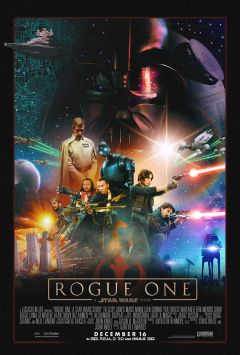
A Spoiler-Free Review of Rogue One: A Star Wars Story

As a lifelong Star Wars fan, I’ll be one of the first to admit that I wasn’t exactly chomping at the bit to see Rogue One.  I was originally more excited about the Spider-Man: Homecoming trailer, but when that dropped on the internet, I held on to the fact that Alan Tudyk was voicing the droid, K-2SO.  It’s nothing personal, but the knowledge that Disney was going to make a Star Wars film every year, but a “main” title only every other year, I was waiting to get back into the exploits of the Skywalker clan, especially when I only got a silent 30 seconds of Luke Skywalker at the end of the last film.

rgjyqwmw7alhlucwpltbSo, with all that said, I was delightfully surprised to find Rogue One an excellent entry into the Star Wars mythos.  In addition to strong main characters with more than just memorable personalities, as well as a cleverly crafted plot that both sets up A New Hope beautifully as well as resolves a notorious long-standing question fans have had about that film, we also get a film that has a strong emotional core that does a good job of showing the high stakes that make up the conflict between the Empire and the Rebel Alliance.  It’s well executed, though far from flawless, and manages to be both fun and strong on substance.

With the exception of Empire Strikes Back, and possibly A New Hope, I would say this is the strongest film in the franchise so far.  The heroes are realistic, with strong motivations, and the villains are unsettling in how evil they are portrayed.  This Empire, personified in the character of Orson Krennic, is a far cry from the one that seems to merely go through the motions of doing villainous things, and instead we see a collective entity that derives a psychotic pleasure from crushing those who would oppose it under its heel in the most painful of ways possible.  It makes for great conflict, and gives viewers a reason to root for the ensemble of ragtag heroes, led by  Jyn Erso, Cassian Andor, and K-2SO.

zz39a7930fThere are some flaws, though I would say they’re relatively minor.  A few of the cameos are good and add to the feel of the universe, though some just feel tacked on for sake of doing so.  The CG effects done for certain legacy characters were of varying quality, and occasionally took me out of the story–I think I would have preferred they re-cast the parts.  And finally, there were one or two physical challenge-style obstacles that had no practical place in the narrative, and just make people wonder what drunk designer could have possibly kept his job after placing said contraption where it ended up.

In many ways, I would liken Rogue One to Star Wars the same way I would liken Deep Space Nine to Star Trek: it’s probably the darkest, yet ultimately the most life-affirming of the franchise so far.  There’s an undeniable sense of the importance of giving your all to an important cause, no matter the personal cost.  It is without a doubt, perhaps not the best of the Star Wars films, but one of–if not the most–meaningful of them, particularly given the cultural and social climate we find ourselves these days.  Definitely worth a view for any fan of the franchise, and anyone who simply likes good storytelling.