I’m Thinking of Deleting Mobile Games From My Phone

A few years ago, I took any and all mobile games off my phone in an attempt to free myself of their addictive hold on my time, attention, and money. I don’t think I went more than a couple months before I downloaded a couple of favorites and was back at it again, playing and swiping as I derided myself for my lack of willpower.

This time, I think I’m ready to make it stick. Here’s why:

  • I won’t be getting rid of ALL mobile games–just the “free” ones. I’m deleting the ones that are “free to play,” which usually support themselves through a number of micro transactions, often built around some form of gambling style gacha system. Essentially, if it uses randomized prizes that incentivizes the use of real money, is gone. Goodbye Marvel Contest of Champions, Marvel Puzzle Quest, and Star Trek Lower Decks. Also, collecting apps like Topps Marvel Select.
  • I WILL be keeping any mobile games I’ve either paid to own, have access to through a game pass system, or that I feel I can use in tandem with content creation projects. These types of games are pretty much paid for and won’t be trying to read recurring income off my payments, and they’ll therefore be more likely to not punish me for not being on them ALL THE TIME. Or not paying to win. So, titles like Grimvalor, Wayward Souls, and Lovecraft’s Untold Tales can stay.
  • I’ve got plenty of other things to do now, and other distractions and media. Seriously. Between podcasts, books, graphic novels, audiobooks, movies, shows, and console & PC games, there already plenty of there to take up my time and attention. And that’s not even taking into account my aspirations as a content creator: between my YouTube channel, this blog, Instagram and so on, it’s not like I don’t have plenty to do when I’m not working. Oh, and of course there’s Trouble to keep me occupied, along with friends and family. Y’know, a life.
  • I’m deleting all mentions of them. Twitter and IG accounts. Subreddits. Emails or other notices that promote them will be modified and taken down. I’m going to remove the temptation by blinding myself to their promotions. It’ll take time, but it’ll be very complete.

I think this will be a good move for me, as I try to increase my productivity and become a better librarian, content creator, and overall person. I’d love to hear people’s perspectives on this, including any similar struggles you’ve dealt with, how you broke them, and what you think of what I’m proposing for myself here.

Best of luck to everyone as we all try to become the best versions of ourselves.

Angel‘s “The House Always Wins” and Pissing It All Away

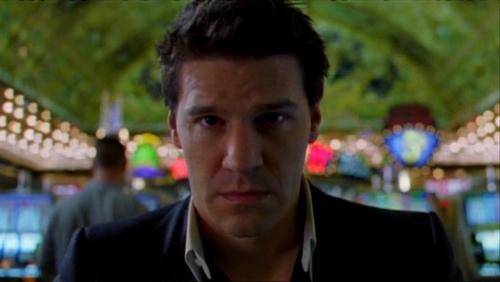
Angel, like Buffy the Vampire Slayer, as well as so many other good shows throughout television history, still occasionally suffered from the odd episode that was clearly filler and failed to really connect with fans.  “The House Always Wins,” the third episode of season 4, was one such installment, but it has one particular plot device that still speaks to me today, which I feel somewhat redeems what is generally regarded as an uneven, bland episode.

The Spin-and-Win, a gambling wheel rigged by the episode’s villain, the casino owner Lee DeMarco, is only accessible by guests chosen by the casino.  DeMarco uses Lorne’s ability to read people’s auras and see their futures, and with this information, chooses the ones with the most profitable destinies.  They are given a special gambling chip to play the Spin-and-Win, with a million-dollar prize as the lure.  When his mark takes the chip, it is imprinted with that person’s future destiny, and when they inevitably lose, they are left virtually mindless, their destiny taken away along with their ambition, and they spend the rest of their lives in a dull haze, listlessly spinning away quarters in the casino’s slot machine.

Most fans feel this is a pretty heavy handed attempt to equate gambling with throwing away one’s future, and while that’s not a completely off-kilter supposition, it’s one I never really connected with gambling in spite of the context.  The Spin-and-Win, along with its devious ‘destiny chip’ component, may have existed in a casino, and been in the purview of gamblers and those who loved games of chance, but to me the symbolism went a lot deeper.  The trap that the Spin-and-Win represented could take any form, and entrap just about anyone, as long as they obsessed enough about it.

Yesterday I wrote about creation vs. consumption, and how Stephen King’s It both represented that struggle and how it’s helped inspire me to throw off (at least for now) the trappings of consumption so I can create.  The image of this thing, the Spin-and-Win, from this episode of Angel, was another of the primary motivators that came to my mind’s eye as I came to this realization.  The Spin-and-Win, in my estimation, could be anything to anyone, much like It could take on the form of anything that its victims feared.  It wasn’t just about gambling, although I suppose my vice of gaming could easily be argued to have many parallels to that pastime.

For me, the Spin-and-Win represents video games. For someone who loves food too much, the Spin-and-Win represents food.  For others, it could be sex, alcohol, television, movies, music.  More broadly, the Spin-and-Win represent excess, the overindulgence of an otherwise harmless vice that creeps into your life and steals from you.  Time, energy, devotion to otherwise creative or self-improving pursuits.  It’s an easy retreat into something that’s comforting, but otherwise and ultimately, pointless.

I admit, “The House Always Wins” is not a great episode of Angel, though I still enjoyed it just fine.  But the idea of someone throwing away their destiny because they see an easy (but rigged and unattainable) win in front of them is a powerful one that has stuck with me through the years.  It’s always been there, in the back of my thoughts, and I’ve at times wondered why that particular form of that vice stuck when there have certainly been others that may have been more apt.

Now I know why, and I’m sending up that image to pull free of my own tendency to put of creating–writing–with something easy to consume–in this case, video games.

It may not be the prettiest or most eloquent way to break free, but so far it seems to be working out well for me.

Creation vs. Consumption

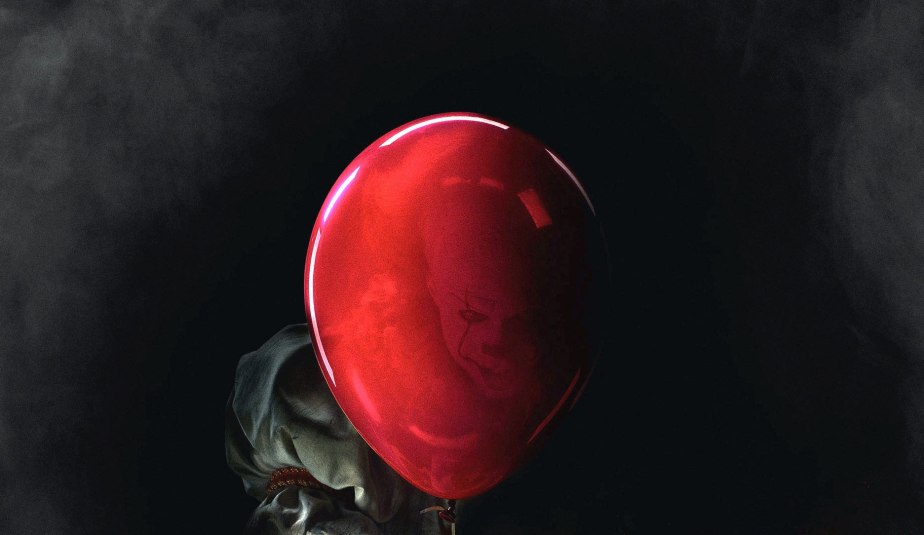
Even though I’m only just now getting around to reading the novel–well, I suppose “reading” as in listening to it on audiobook–one of my favorite horror stories of all time is Stephen King’s It.  The 1990 made for television miniseries scared the hell out of me as a tween, and I loved it for it.  There was always something about Pennywise, as portrayed by Tim Curry, and more recently by Bill Skarsgard, that really succeeded in both creeping me out and eliciting a delightful sense of terror in the whole killer clown as a villainous entity.  I’d been unsettled by them before–Poltergeist jumps readily to mind–but this story really gave the trope new life in my imagination, and remains impossible to forget to this day.

I don’t know all of the lore behind It (hence the reason I’m listening to the audiobook), but I’ve certainly heard quite a bit of it, even without having read the notoriously doorstop-sized tome King wrote.  I’ve been regaled with tidbits from the more cosmically inclined pieces of lore from the story by countless enthusiasts on YouTube.  Friends who have read it have explained to me, in great levels of detail and with appropriate shock, the infamous group sex scene that has never been given life in the films.  And I’ve heard, from friends, YouTubers, and internet boards at large about how It and its characters and settings connect with the rest of King’s larger dark universe.  It’s fascinating stuff, and I plan to explore it as time and energy allow.

It’s no surprise to me that, at its heart, It is a story about consumption versus creation.  Pennywise, as the titular It, consumes the children of Derry, Maine every 27-28 years before returning to its slumber.  While It has no qualms about taking adults, It prefers children, particularly when they’re scared (the analogy of fear as a ‘sauce’ or ‘salt’ to the ‘meat’ that is the children).  It consumes, then sleeps for nearly thirty years, then returns to consume again.  Derry’s precarious prosperity seems tied to It’s existence, and even when Pennywise slumbers, It’s influence still manifests in subtle ways, which only seems noticeable to the town’s children.

Even the story’s heroes, the Losers Club, are plagued by the forces of consumption in their lives outside of Derry.  Sure, they joined together as kids to defeat It, but once they moved on they forgot each other and their shared experience.  They forgot about Derry, and It.  And though they may have made prosperous lives for themselves, none of them ever managed to have children.  The narrative suggests this is a result of It’s influence over them, even from afar, making Pennywise/It–already a consummate consumptive entity–a force that stops them from creating life of their own.

If It cannot consume the precious life you create, then you will not be allowed to create.  Pretty dark stuff.

And it’s at this point that I tie that theme into my own life, and the lives of many artists, writers, creators, and humans at large.  I learned a long time ago that, when people have free time, they basically spend it doing one of two things: creating, or consuming.  Consuming food, consuming entertainment, consuming air, water, energy, and so on.  Creation, while satisfying, is a lot harder to pull off, or at least do well: writing stories, painting, building, sculpting; hell, even cooking dinner is harder than eating it.

We rely on creators for the things we consume, and for many of us, having things to consume is all we need.  There are a ton of creators out there, of many and various things, after all.  But there are many of us who need more than to simply consume. Whether it’s a need to prove onself, or because someone has an idea or a thing they simply need to share with the world, there are creators.

For the past few months, I have not been one of them.

I’ve been caught up in the throes of consumption, and it’s not always easy to break out of them.  For me, the poison tends to be video games, which are so very entertaining, but which also aren’t exactly good for encouraging moderation in their consumption.  I haven’t written in this blog for several months, and have done little in the way of writing that wasn’t either directly related to my job, or directly related to video gaming.  I have become obsessed with having the highest score, unlocking the latest reward, or getting the latest piece of shiny equipment for my characters.

All of which, aside from the straight objective of entertainment, serves no real purpose.

I’m not saying that entertainment in and of itself is a bad thing, but when you’re putting most of your spare time into it, it becomes an obsession.  It takes you away from friends and family.  It takes you away from creating–or in my case, writing.  And ultimately, it can chip away at your soul.  Your potential for doing other, greater, things is simply sucked away.

And I’ve finally started to feel that.

I’ve known it, intellectually, for some time.  But knowing it and feeling the large swaths of time passing in idle bouts of doing essentially nothing are two separate things.  The obsessive abandon you put into consumption of a particular thing eventually wears off, and you start to realize there’s more you could be doing, if you weren’t sinking all of your time, and energy, and passion into something that wasn’t already made simply to be consumed.

I’m not saying I’m kicking my video game habit.  I’m not sure I’m strong enough for that.  But I am saying I’m aware of it enough to be apprehensive.  I’m trying to break free of it, or at the very least strike and maintain a healthy balance between my gaming and my creativity.  I’m going to try to write more, though of course I can guarantee only that right now.

Hopefully this is the start of many more successive and regular blog entries.  Hopefully I’ll be able to get a bigger chunk of my novel edited and ready for publication.  Hopefully I can find the strength to leave behind the obsessions with which I distract myself from creating.  Hopefully I can do all these things and much more.

Because hope, as Stephen King also wrote, is a good thing.  Maybe the best of things.  And while that line may not be from It, It is also ultimately about hope, and its power (along with that of friendship) to overcome darkness.

So, as I continue to listen to It, I also have hope that I will continue to write regularly, and create regularly.